As more and more options for virtual therapy become available, many parents and caregivers find themselves asking an important question: What is the difference between virtual therapy and in-person therapy – and is one more effective than the other?
At ROWI, we believe that access to mental healthcare in any form can be life-changing and life-saving. Supporting mental wellness is essential for all people, and there is no one-size-fits-all approach. However, we also recognize that the way care is delivered can meaningfully shape the therapeutic experience.
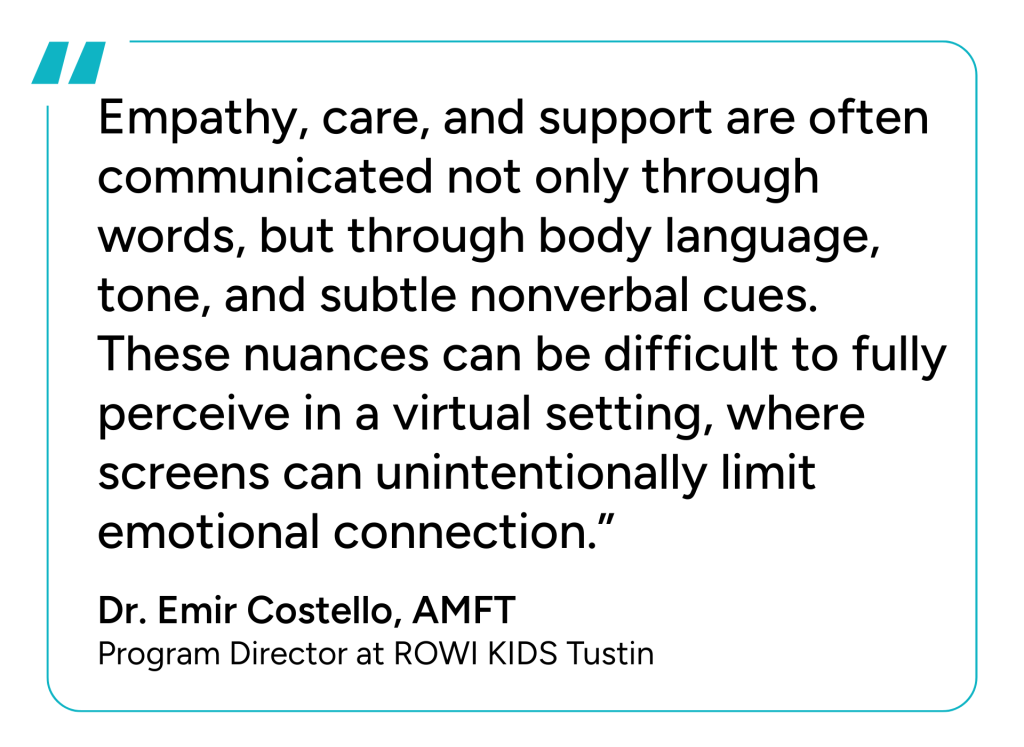
According to Dr. Emir Costello, AMFT, Program Director at ROWI KIDS Tustin, one of the most significant differences between virtual and in-person therapy is the presence of tangible human energy.
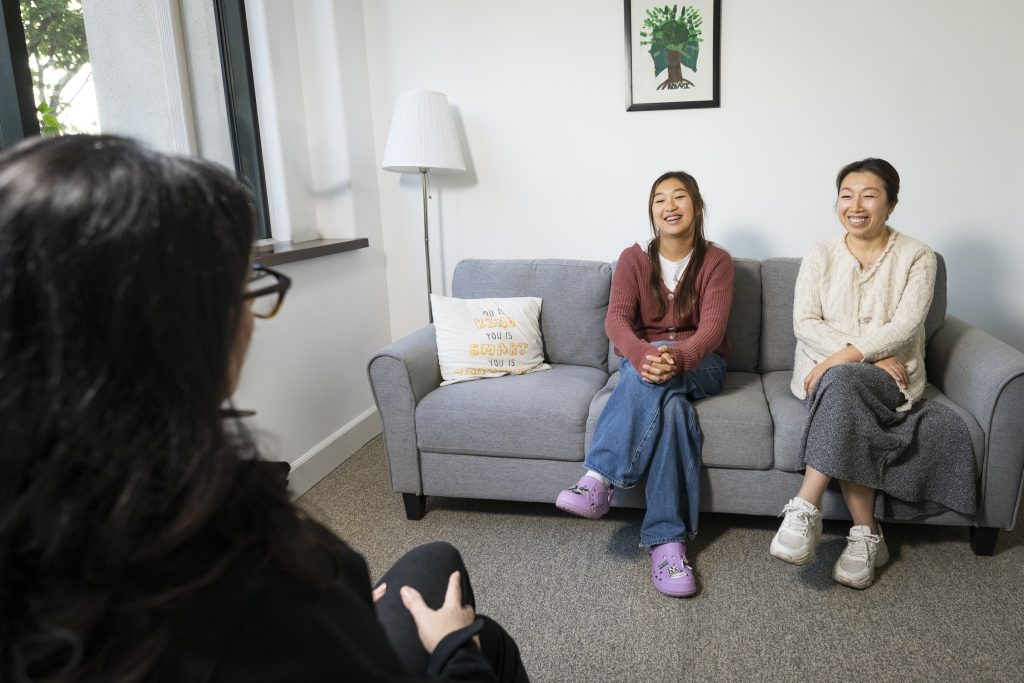
“Having a real-life person in front of you, expressing compassion and conveying empathy, just hits differently than having the barrier of a computer screen between you,” he explains.
For many families, virtual care can be a critical entry point into therapy and a valuable support tool. However, there are also key benefits of in-person therapy that simply aren’t possible through virtual platforms.
ROWI’s in-person programs – ROWI RESET, ROWI GROWTH, and ROWI EDGE – are intentionally designed to offer immersive, relational, and experiential care that supports teens in multiple dimensions of their lives. These programs provide opportunities such as group therapy, where teens can meet peers with shared experiences, build relationships, and reduce feelings of isolation. Being physically present with others allows for organic connection, mutual understanding, and the reassurance that they are not alone.
In addition, ROWI offers social skills that help teens with autism and other social challenges practice real-world interactions in supportive, structured environments. Therapeutic yoga and mindful eating practices encourage grounding, body awareness, and meaningful movement, helping teens reconnect with themselves beyond talk therapy alone. Music and art therapy further support emotional expression, offering creative, judgment-free outlets for processing feelings that may be difficult to put into words.
Through these offerings, ROWI serves the whole child – addressing not just mental and emotional health, but the broader systems that influence wellbeing, including social connection, physical regulation, and self-expression.
“When we meet with our clients and families in-person, we’re able to share our human connections in the same physical space and allow them to feel held in their emotional experiences,” says Lindsay Shine, LCSW, Program Director of ROWI Mission Valley. “This shared presence can foster trust, safety, and healing in ways that are uniquely powerful.”
At ROWI, we are committed to meeting teens and families where they are, while offering in-person care that centers connection, community, and whole-person healing.